
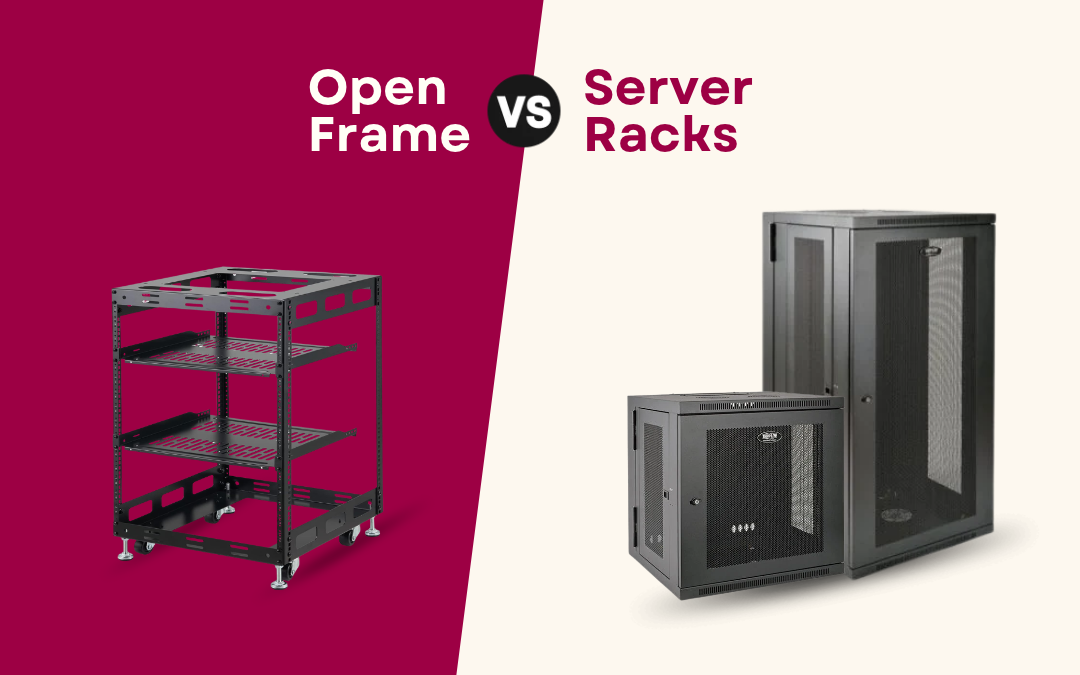
Choosing the right server rack is essential for organising, securing and maintaining your IT infrastructure. Whether you operate a small office, networking room or large data centre, the right rack helps protect equipment, improve airflow and simplify cable management.
When comparing open frame vs enclosed server racks, businesses should consider equipment security, ventilation, accessibility, available space and operational requirements. Understanding the differences between these server rack types can help you make an informed decision for your IT environment.
Businesses looking for a reliable server rack in Brisbane should consider factors such as equipment security, ventilation, cabinet dimensions and cable management before selecting a suitable solution.
What Are Open Frame Server Racks?
An open frame server rack features an exposed structure without front, rear or side panels. It typically consists of vertical mounting rails supported by a metal frame, allowing easy access to installed equipment.
These racks are commonly used in controlled IT environments where physical security is managed separately. Their open construction provides convenient access for technicians, making equipment installation, cable management and routine maintenance easier.
Benefits of open frame server racks include:
- Easy access to equipment from multiple sides.
- Open construction that supports natural airflow.
- Convenient cable installation and management.
- Suitable for environments with dedicated equipment rooms.
- Often lighter and simpler to install than enclosed cabinets.
However, open frame racks offer limited physical protection against dust, accidental contact and unauthorised access. They may not be suitable for shared spaces or environments where equipment security is a priority.
What Are Enclosed Server Racks?
An enclosed server rack is a cabinet-style storage solution designed to house and protect servers, switches, patch panels and other networking equipment. Unlike open frame designs, enclosed cabinets feature front and rear doors and side panels.
These cabinets are commonly used in offices, server rooms and data centres where equipment organisation, physical security and controlled airflow are important.
Benefits of enclosed server racks include:
- Improved physical security with lockable doors and panels.
- Better protection against accidental contact and environmental dust.
- Organised equipment installation and cable management.
- Ventilated doors and panels to support airflow.
- Suitable for housing different types of 19-inch rack-mounted equipment.
Closed-frame cabinets are available in different rack heights and depths, allowing businesses to select a suitable configuration based on their equipment requirements.
Open Frame vs Enclosed Server Racks: Key Differences
Understanding the difference between open frame and enclosed server racks helps businesses select the right option.
| Feature | Open Frame Server Rack | Enclosed Server Rack |
| Construction | Exposed metal frame | Cabinet with doors and side panels |
| Physical Security | Limited | Lockable doors and panels |
| Equipment Protection | Minimal protection | Better protection from dust and accidental contact |
| Airflow | Open airflow | Ventilated doors and panels |
| Accessibility | Easy access from multiple sides | Access through doors and removable panels |
| Cable Management | Open cable routing | Organised cable entry and management options |
| Applications | Controlled IT environments | Offices, server rooms and data centres |
While open frame racks offer convenient access, enclosed server rack cabinets provide additional protection and security for valuable IT equipment.
Which Server Rack Is Best for Your IT Environment?
The right choice depends on your infrastructure, installation environment and security requirements.
For businesses operating in dedicated, access-controlled equipment rooms, an open frame rack may provide sufficient accessibility and airflow.
However, enclosed server racks are often a practical choice for businesses that need secure equipment storage, organised cabling and protection for critical networking infrastructure.
For organisations managing multiple servers, switches and networking devices, 19-inch server racks provide a standardised mounting solution that supports equipment organisation and installation flexibility.
Important Factors to Consider When Choosing a Server Rack
Before purchasing a server rack, consider the following factors:
- Rack Capacity: Check the required rack units (RU) to ensure sufficient space for current equipment and future expansion.
- Cabinet Dimensions: Consider the width, height and depth of your equipment before selecting a cabinet.
- Ventilation: Proper airflow is important for managing heat generated by servers and networking devices. Look for suitable ventilation features.
- Physical Security: Lockable doors and side panels can help prevent unauthorised access to valuable IT equipment.
- Cable Management: Multiple cable-entry points and suitable cable management accessories help maintain an organised installation.
- Installation Requirements: Consider wall-mounted or floor-standing configurations based on available space and equipment load.
Explore Reliable Server Rack Solutions in Australia
Selecting the right server rack is an important step towards building an organised and dependable IT environment. While open frame racks provide accessibility, enclosed server racks offer additional physical protection, security and equipment organisation.
At Source 22, businesses can explore a range of Rack Tech closed-frame server rack cabinets designed for different IT infrastructure requirements. With options available in various rack capacities, widths and depths, you can find a suitable cabinet for your networking and server equipment.
Whether you’re searching for server rack solutions in Australia or a reliable server rack in Brisbane, choosing an enclosed cabinet can help protect valuable IT equipment while maintaining an organised and efficient installation.
