
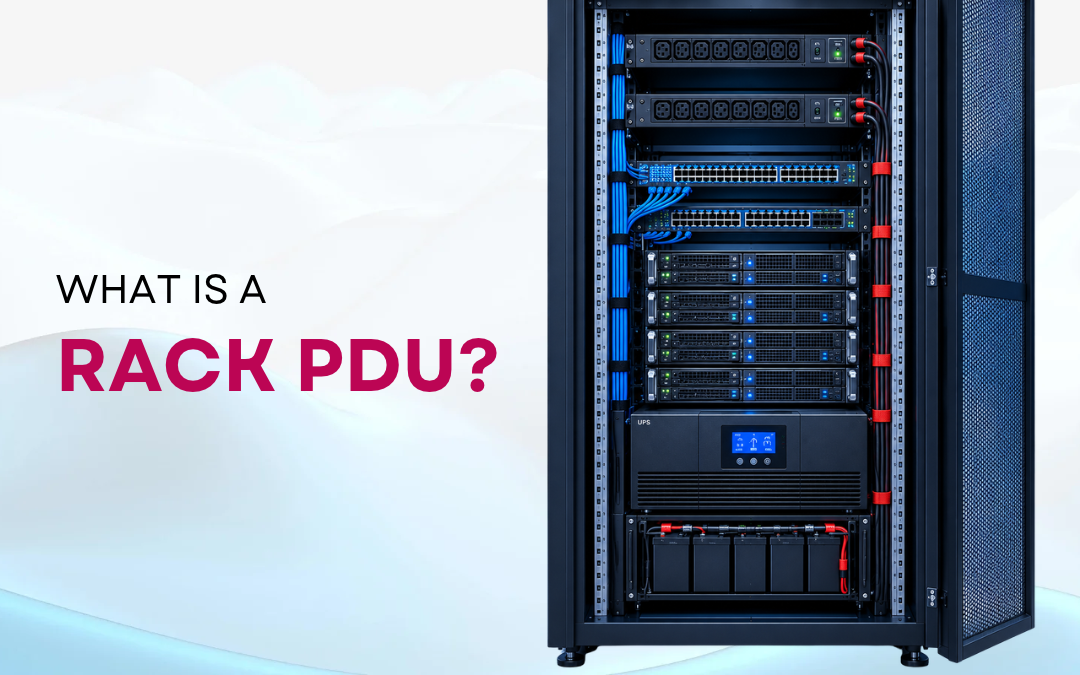
Managing power efficiently is essential for keeping servers, networking devices and other IT equipment running reliably. In server rooms and data centres, multiple devices often need power from a central source. A Rack Power Distribution Unit (PDU) helps simplify this process by distributing electricity to equipment housed within a server rack.
Whether you manage a small business server room or a large IT infrastructure, understanding how a rack PDU works can help you improve power management, organise cables and choose the right solution for your requirements.
What Is a Rack PDU?
A Rack PDU (Power Distribution Unit) is a device designed to distribute electrical power from a single input source to multiple devices mounted inside a server rack or cabinet. It provides several power outlets, allowing servers, switches, routers and storage equipment to receive power through a centralised distribution point.
Unlike a standard household power board, a rack PDU is designed for IT environments and comes in different configurations to suit equipment requirements, rack layouts and power loads. Depending on the model, it may also provide power monitoring, remote management and individual outlet control.
Businesses can explore Source 22’s range of rack PDU and power distribution units to find suitable options for their server rooms, networking setups and data centre infrastructure.
How Does a Rack PDU Work?
A rack PDU receives electricity from a power source, such as a mains supply or an Uninterruptible Power Supply (UPS), and distributes it through its available outlets to connected IT equipment.
For example, a server rack may contain several servers, network switches and storage devices. Instead of connecting every device directly to separate wall outlets, a rack PDU provides a central location for managing their power connections.
When connected to a UPS, the PDU distributes the backed-up power supplied by the UPS to the connected equipment during a power interruption, subject to the available UPS capacity and runtime. However, a standard PDU does not provide battery backup itself.
What Are the Different Types of Rack PDUs?
Rack PDUs are available in several types, each offering different levels of power management and control.
1. Basic Rack PDU
A basic PDU distributes electricity to multiple devices without advanced monitoring or remote control features. It is suitable for smaller server rooms and installations where straightforward power distribution is the main requirement.
2. Metered Rack PDU
A metered PDU displays electrical measurements, such as current or power consumption, depending on the model. This helps IT administrators monitor rack loads and identify potential capacity issues.
3. Monitored Rack PDU
A monitored PDU provides remote visibility into power consumption through a network connection or management interface. Some models also support alerts and environmental monitoring, helping IT teams oversee critical equipment more effectively.
4. Switched Rack PDU
A switched PDU allows authorised users to control power to individual outlets remotely, depending on the model. This can be useful when restarting unresponsive equipment or managing connected devices without physically accessing the rack.
For a more detailed comparison, read our guide to the types of rack PDUs and their features.
What Are the Benefits of Using a Rack PDU?
Using a suitable rack PDU offers several practical benefits for businesses and IT teams.
Improved cable management: Rack PDUs provide a central location for power connections, helping keep cables organised and making equipment easier to access.
Efficient power distribution: Multiple devices can receive power from one distribution unit, simplifying connections within a server rack.
Better power visibility: Metered and monitored models help administrators understand power consumption and make informed decisions about equipment loads.
Remote power control: Switched PDUs can allow IT teams to restart selected devices remotely, reducing the need for physical intervention.
Scalability: Selecting a PDU with suitable outlet capacity and electrical ratings helps accommodate current equipment and planned infrastructure expansion.
These benefits depend on the PDU’s capabilities, correct installation and compatibility with the wider electrical system.
What Is the Difference Between a Rack PDU and a UPS?
Although rack PDUs and UPS systems work together, they serve different purposes.
A UPS provides battery backup during power interruptions and may also condition the incoming power, depending on its design. A rack PDU distributes available power to multiple connected devices.
For example, a Uninterruptible Power Supply can supply backup power to a server rack during a blackout, while the connected PDU distributes that power to the servers and networking equipment. Using appropriately sized equipment helps create a more organised and reliable power infrastructure.
How to Choose the Right Rack PDU
Before selecting a rack PDU, consider these important factors:
- Power requirements: Check the total equipment load, input voltage, current rating and circuit capacity.
- Number of outlets: Ensure there are enough compatible outlets for existing devices and planned expansion.
- Outlet and plug types: Verify that the PDU connections match your equipment and power supply.
- Mounting configuration: Choose a horizontal 1U or 2U model, or a vertical 0U model, based on available rack space and cable layout.
- Monitoring and control: Decide whether basic distribution is sufficient or whether remote monitoring and switching are necessary.
- UPS compatibility: Confirm that the PDU is suitable for the UPS output and the intended electrical configuration.
For more advanced power management, consider a smart switched PDU that supports remote outlet control and, depending on the model, power monitoring.
Always follow manufacturer specifications and applicable electrical safety requirements when installing power distribution equipment.
Conclusion
A rack PDU is an important component of server room and data centre infrastructure. It distributes power to multiple devices, supports organised cable management and can provide additional monitoring and control features when required.
Choosing the right PDU depends on your equipment, power capacity, rack configuration and management needs. Explore Source 22’s power distribution solutions to find a suitable option for your IT infrastructure and power management requirements.
