
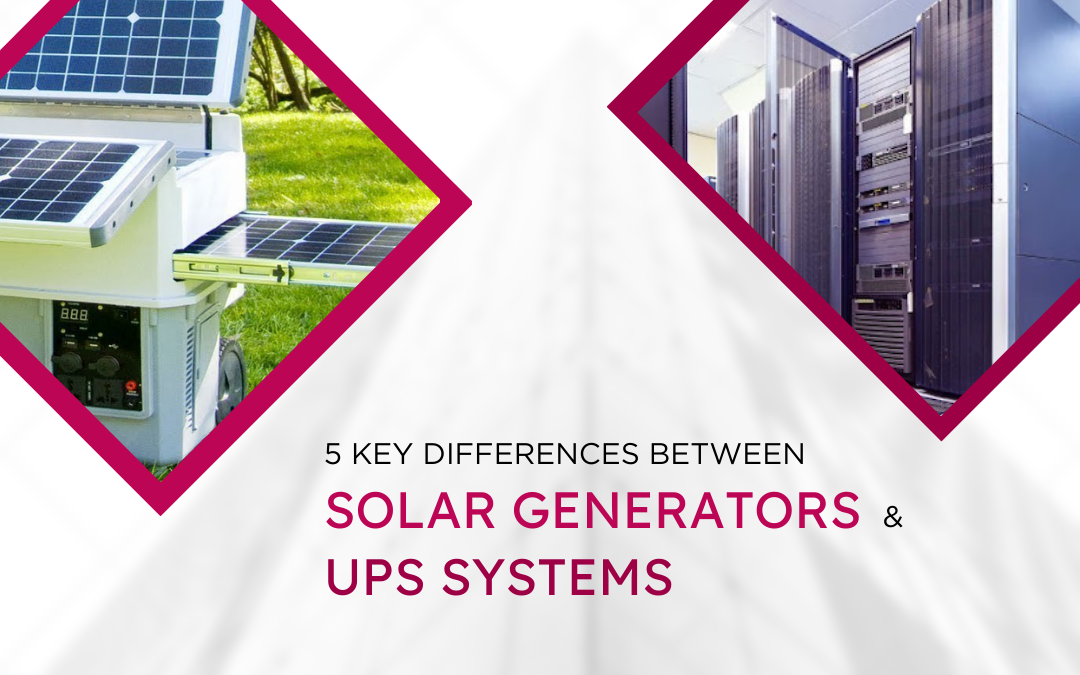
When it comes to backup power solutions for Australian homes and businesses, two popular options often come up: solar generators and UPS (Uninterruptible Power Supply) systems. While both provide emergency power during outages, they serve distinctly different purposes and operate in fundamentally different ways. Understanding these differences is crucial for choosing the right power backup solution for your specific needs.
What Are Solar Generators and UPS Systems?
Before diving into the differences, let’s clarify what each system does. An uninterruptible power supply is a dedicated device designed to provide instantaneous backup power to critical equipment like computers, servers, and networking gear. A UPS power supply keeps your sensitive devices running seamlessly when mains power fails, preventing data loss and equipment damage.
Solar generators, also known as portable power stations, are battery storage systems that can be recharged through solar panels, wall outlets, or car chargers. They offer versatile, mobile power solutions primarily designed for outdoor activities, camping, and emergency situations.
1. Transfer Time and Power Continuity
The most critical difference between these two systems lies in how quickly they respond to power outages. UPS systems provide instantaneous power switching—typically within 2-10 milliseconds for online double conversion models. This seamless transition ensures your computers, servers, and sensitive electronics experience zero interruption.
Solar generators, conversely, require manual connection to your devices and typically have a transfer time of 20-30 milliseconds or longer. For sensitive IT equipment that cannot tolerate even brief power interruptions, this delay can cause shutdowns, data loss, or system crashes. This makes solar generators unsuitable for protecting critical business infrastructure that requires continuous operation.
2. Primary Purpose and Application
UPS power supply systems are purpose-built for one specific job: protecting sensitive electronic equipment from power disturbances. They excel at safeguarding servers, workstations, networking equipment, medical devices, and point-of-sale systems. Australian businesses rely on UPS systems to maintain operations, prevent costly downtime, and protect valuable data.
Solar generators serve a broader range of applications. They’re designed for portability and versatility, making them ideal for camping trips, outdoor events, construction sites, and general emergency preparedness. While some modern solar generators include a basic UPS mode, they cannot match the instantaneous switching and power conditioning capabilities of dedicated uninterruptible power supply units.
3. Runtime and Capacity
Standard UPS systems typically provide backup power ranging from 10 minutes to several hours, depending on the load and battery capacity. Their primary goal isn’t long-term power generation but rather giving you sufficient time to save work, shut down equipment safely, or bridge short outages until mains power returns or a generator starts.
Solar generators offer more flexible runtime options, with capacities ranging from 500Wh to 2,000Wh or more. They can power smaller loads for extended periods—potentially hours or even days when paired with solar panels. However, this extended runtime comes at the cost of instant switching capability and the power conditioning features that make UPS systems essential for IT infrastructure.
4. Power Quality and Protection Features
Professional UPS power supply units do more than just provide backup power. They actively condition electricity, filtering out voltage sags, surges, spikes, and electrical noise that can damage sensitive components. Online double conversion UPS systems continuously regenerate clean, stable power regardless of input quality.
Australian businesses particularly value this protection, as power quality issues are common in many areas. Solar generators typically provide basic inverter output but lack the sophisticated voltage regulation, frequency control, and filtering capabilities that define quality UPS systems. They convert stored DC battery power to AC but don’t offer the comprehensive power conditioning that protects expensive IT infrastructure.
5. Installation and Portability
UPS systems are designed for fixed installation in server rooms, data centres, offices, and medical facilities. They connect permanently to your critical equipment and mains power, operating automatically without user intervention. Larger UPS units may require professional installation, proper ventilation, and dedicated circuits.
Solar generators prioritise portability. Most models feature carry handles, compact designs, and multiple output options including USB ports, 12V sockets, and AC outlets. You can easily move them between locations, recharge them in various ways, and use them wherever backup power is needed. This mobility makes them excellent for varied applications but impractical for protecting stationary business infrastructure that requires constant, automatic protection.
Choosing the Right Solution for Your Australian Business
For businesses requiring reliable protection for computers, servers, networking equipment, and other sensitive electronics, a proper uninterruptible power supply remains the only viable option. The instantaneous switching, power conditioning, and automated operation of UPS systems are irreplaceable for protecting critical infrastructure.
Solar generators complement this protection by offering portable, versatile backup power for different scenarios. Many Australian businesses use both: UPS systems protect their IT infrastructure, while solar generators provide flexible power for outdoor operations, temporary sites, or emergency preparedness kits.
At Source 22, we specialise in professional-grade UPS power supply solutions tailored to Australian business needs. Our range includes models from leading brands like APC, Eaton, and CyberPower, designed to protect everything from single workstations to entire data centres. Whether you need basic backup power or sophisticated infrastructure protection, we can help you select the perfect UPS system for your requirements.
Don’t leave your critical business systems vulnerable to power disruptions. Contact Source 22 today to discuss your UPS requirements and discover how professional power protection can safeguard your operations.
