
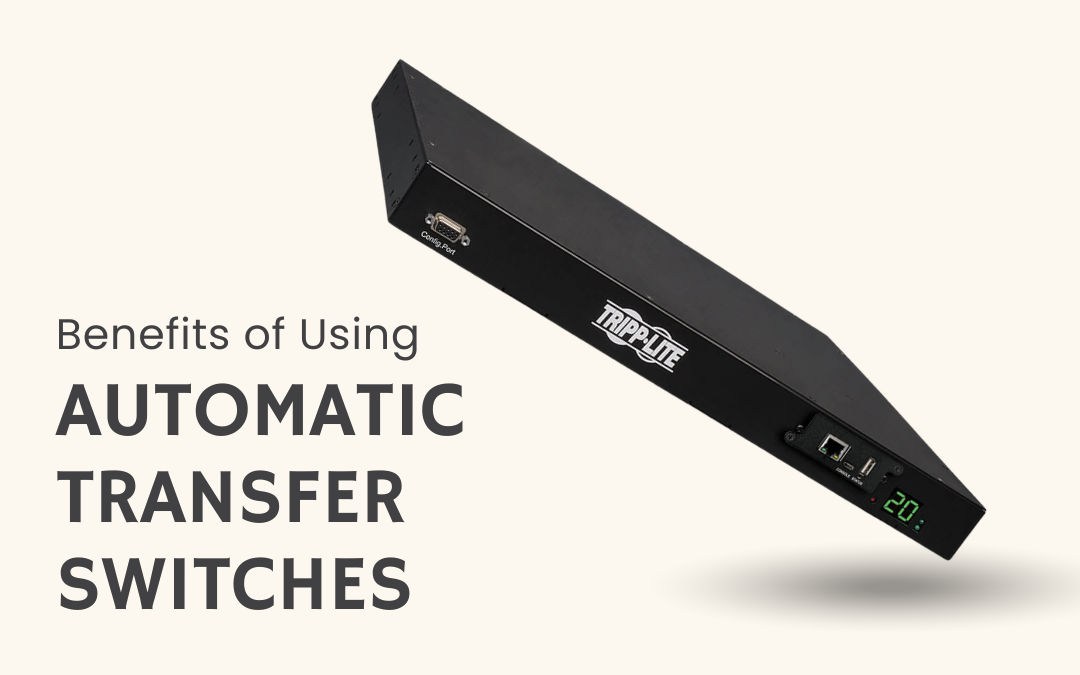
A complete power outage can be detrimental to businesses across numerous industries. Today’s economy is dependent on electricity and, without it, there is a risk of disruption even for short periods. Many companies rely on Automatic Transfer Switches (ATS) to keep operating and reduce the risk of lost productivity and profits.
The ability to transfer power automatically from the primary utility source to a secondary backup power source, such as a generator or UPS, ensures that business operations continue uninterrupted.
What are Automatic Transfer Switches?
Automatic Transfer Switches are electrical units that automatically monitor the supply of electricity into a building/system. If the primary supply of electricity falls short of the industry standard for acceptable delivery, the ATS will automatically switch the load of electricity over to the secondary source (generator or UPS system) until the primary supply has returned to the industry standard for acceptable delivery; at which time, the ATS will automatically switch the load back to the primary source without any human intervention.
Key Benefits of Automatic Transfer Switches
1. Consistent Level of Electricity Supply
Due to their ability to provide a continuous electricity supply, Automatic Transfer Switches are an extremely beneficial device for many businesses. An interruption in your supply can lead to irritation, corrupt your data, or cause production delays. Because ATS operates without delay, it will allow your business to continue operating during periods of electrical interruption.
2. Protecting Critical Electronics
When there is an unexpected power outage or a voltage fluctuation, sensitive electronics may be damaged. An ATS, together with a UPS system, will deliver clean, steady current to your equipment so that no damage occurs while transitioning from your normal operating condition to the backup supply. By protecting your electrical equipment from damage, you will improve its performance, increase its operational life, and reduce the cost of repairs.
3. Enhanced Safety
A manual power transition can create a hazardous situation for personnel. Utilizing the UPS automatic transfer switch keeps workers safe during an emergency by allowing them to not come into direct contact with raw electricity.
4. Adaptable and Configurable Design
Today’s Automatic Transfer Switch is designed to grow with your facility. As your facility grows or has greater power demands, an ATS can be retrofitted or configured to support higher load outputs and/or multiple sources of power.
5. Long-Term Cost Efficiency
Using an automatic transfer switch can seem costly to install. However, this initial investment pays off over the long run. It prevents loss of income due to downtime, and protects valuable equipment while maintaining business continuity, so that the long-term financial benefits of having one far outweigh the initial costs associated with its installation.
Modern ATS Provide Greater Value
Modern automatic transfer switches have more than just lower operating costs as compared to older switch models. They can now be operated and monitored remotely, transfer power rapidly between both power sources, and utilize an intelligent system to monitor the power being transferred for purposes of optimizing the use of electricity. This gives customers greater visibility as to the total power being consumed and ways to increase usage efficiency.
Conclusion
Automatic transfer switches supply automatic switching between the regular electricity source and alternate power sources such as generators and UPS systems. They help to ensure that the electricity supply for this workplace remains uninterrupted while improving both reliability and safety.
