
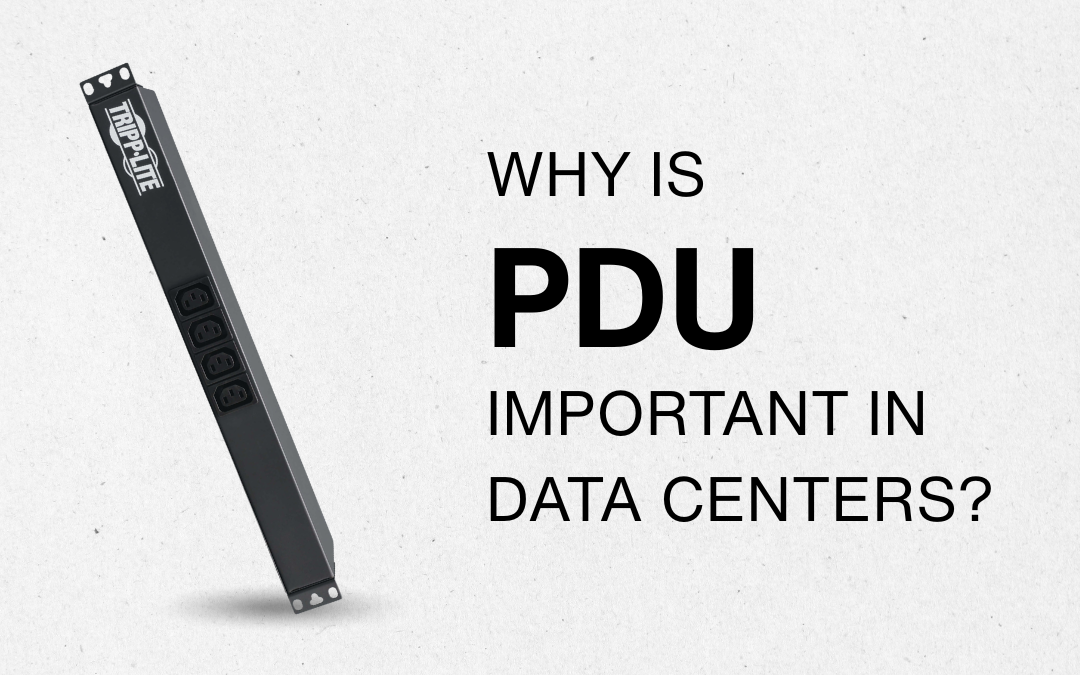
Data centers rely heavily upon Power Distribution Units. Without them, there would be no way to safely distribute electrical power from either a UPS or a utility feed to various types of Servers, storage devices, and networking equipment. As a result, businesses are unable to provide effective management of their power infrastructure without PDUs.
Because of modern technology’s centralised power distribution, reduced downtime, and overload protection, PDUs enable organisations to effectively monitor power consumption in real time, thereby enhancing reliability, scalability, and operational efficiency.
The Importance of PDUs in Data Centers
Utilizing Power Distribution Units in data centers is essential due to their capability of managing complex, high-density electrical needs efficiently and safely.
What is a PDU in a data center?
A Power Distribution Unit distributes and delivers power from a primary electrical source, such as a UPS or generator, to multiple racks or devices at the same time.
The following are some of the most notable benefits of using a PDU for power distribution in a data center:
- Structured/organized power distribution
- Minimized risk of circuit overloading
- Easier to perform maintenance and troubleshoot faults
- Easier to scale as the data center Infrastructure continues to grow
Reliable Power Distribution
For all data centers to remain continuously operational, PDUs work in collaboration with an Uninterruptible Power Supply (UPS) to do the following:
- Maintain data center operations during electric service failures
- Prevent sudden equipment shutdowns as a result of unexpected power failures
- Protect sensitive electronic devices from electrical malfunctions
Advanced Monitoring with Smart PDUs
Smart PDUs give you improved visibility and management over basic Power Distribution Units. They are crucial in environments that need effective energy usage and performance monitoring.
Standard features of these distribution units include:
- Monitoring real-time power
- Taking remote control over outlets
- Providing reports of energy usage
- Generating alarms for overloads
How Do PDUs Work?
A Power Distribution Unit delivers power to multiple output connections to the servers, networking, and other technology devices in a rack from a primary (e.g., utility, generator, or uninterruptible power supply) source of electrical power.
In simple terms:
- Input – Power is delivered to the PDU from the primary power supply or UPS.
- Distribution – The electrical power is delivered to many powered devices connected to the Power Distribution Unit.
- Protection – Some distribution units include circuit breakers or surge protection.
- Monitoring – Many Smart PDUs measure and report on the energy consumption of connected devices.
Why Smart PDUs Are Essential Today?
With rising energy prices and an increase in sustainability goals, Smart PDUs are a key to improving efficiency. By using them, operators can:
- Reduce Energy Wastage
- Balance Electrical Loads
- Identify Lots of Underutilised Equipment
- Improve Capacity Planning
Small levels of efficiency improvement can lead to significant savings for large facilities.
FAQs
1. What is a PDU in a data center?
A PDU distributes electrical power from a UPS or main supply to multiple devices within a server rack.
2. How do PDUs work with a UPS?
Backup power from a UPS is supplied to devices connected to a PDU via its outlets. The power supplied to the outlet is the backup power provided by the UPS in the event of a mains power failure.
3. Are Smart PDUs necessary?
Smart PDUs can provide data center operators with the necessary monitoring, remote management capability, and improved energy efficiency when compared with standard Power Distribution Units.
